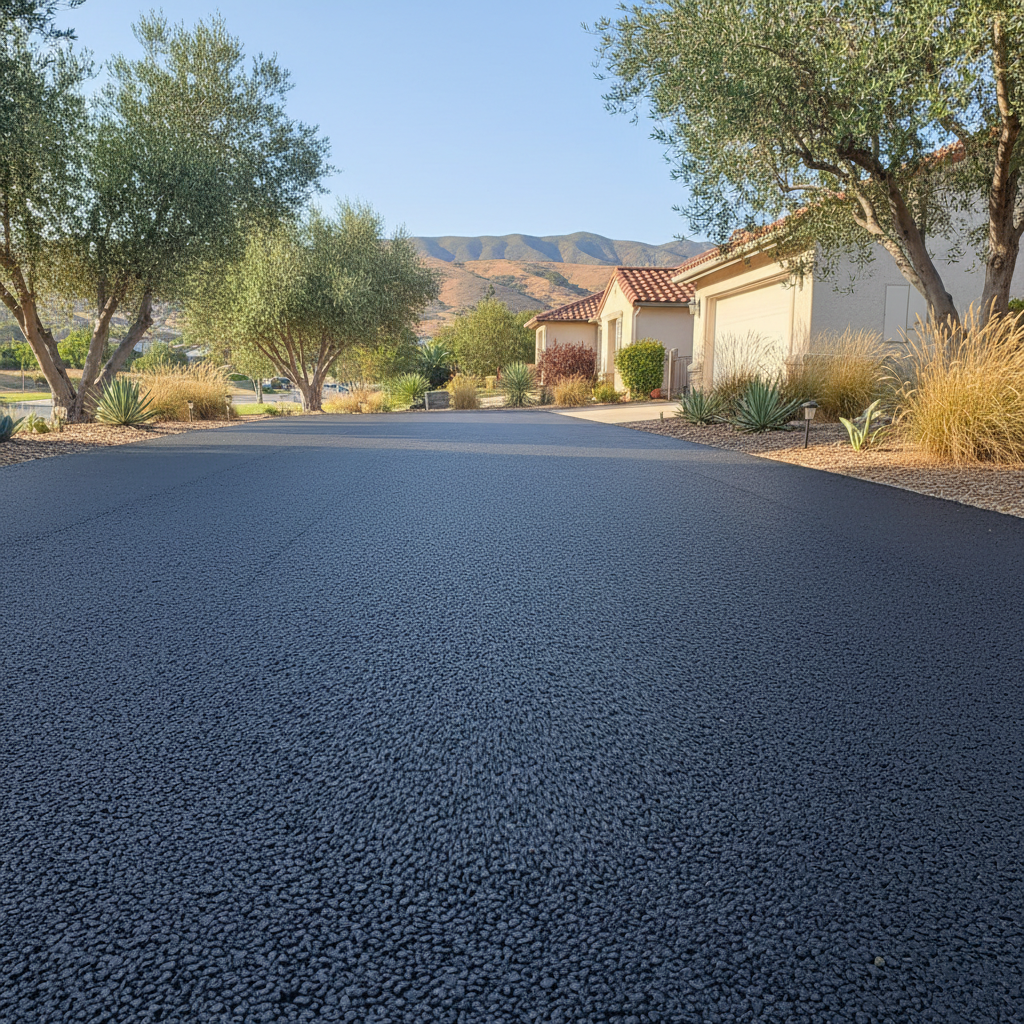
Alright, let's talk about your asphalt driveway. I've been doing this a long time here in La Mesa, and I hear the same questions over and over from folks just like you. It's good to ask, too, because a lot of what you hear out there isn't quite right. So, I figured I'd put together some straight answers to your most common asphalt questions. No fluff, just what you need to know.
What's the deal with cracks? Are they always a big problem?
Cracks are pretty much inevitable with asphalt, especially here in La Mesa where we get those hot summers and cooler winters. The material expands and contracts, and eventually, it's going to show some stress. Now, not all cracks are created equal. Fine, hairline cracks? Usually not an emergency. We can often seal those up, and it'll help prevent water from getting in and making things worse. But if you've got cracks that are wide, deep, or starting to spiderweb and create a 'alligator skin' pattern, that's a different story. Those mean the base layer underneath is probably failing, and you're looking at more significant repairs, maybe even a section replacement. Don't ignore those; water is asphalt's worst enemy, and those cracks are just an open invitation.
How long should a new asphalt driveway actually last?
That's a question without a single perfect answer, but I can give you a good range. If it's installed right, with a solid base and quality materials, and you do some basic maintenance like sealcoating every few years, you should get 15 to 20 years out of it, easily. I've seen some last even longer. What shortens its life? Poor drainage, heavy vehicle traffic (like parking an RV on it all the time without proper reinforcement), and neglecting those small cracks until they become big problems. The initial quality of the installation, though, that's the biggest factor. You get what you pay for, and cutting corners on the base or asphalt thickness will always come back to bite you down the road.
My driveway has puddles after it rains. Is that normal?
Absolutely not. Puddles mean you've got a drainage problem, and that's something you want to fix. Asphalt should be graded to shed water away from your house and off the surface. If water is sitting on your driveway, it's soaking into the asphalt, weakening the material, and eventually, it's going to cause potholes and bigger issues. It's especially important here in areas like Mount Helix, where you often have sloped properties. Sometimes it's a simple fix, like adding a small swale or adjusting the grade. Other times, it might mean repaving a section to correct the slope. But trust me, addressing standing water is crucial for the longevity of your driveway.
Can you just patch a pothole, or does it need more?
You can definitely patch a pothole, and it's a good temporary fix to prevent it from getting worse and to make your driveway safer. For a quick fix, especially in winter, we'll often use cold patch asphalt. It's easy to work with and gets the job done. But for a more permanent repair, especially if the pothole is deep or there are several, you'll want a hot asphalt patch. We cut out the damaged section, clean it thoroughly, apply a tack coat, and then fill it with hot asphalt, compacting it properly. That's going to last much longer. Just patching the surface without addressing the underlying cause (usually water intrusion or a weak base) means the pothole will likely reappear nearby.
What's the difference between sealcoating and paving?
Big difference. Paving is laying down new asphalt, either a brand new driveway or an overlay on an existing, structurally sound one. It's a major job. Sealcoating, on the other hand, is a maintenance step. It's a liquid application that goes over your existing asphalt. Think of it like sunscreen and a protective topcoat for your driveway. It protects the asphalt from UV rays, water, oil, and gas, and gives it a nice dark black finish. It also fills in tiny hairline cracks. You sealcoat every 2-4 years, depending on wear and tear. You don't pave every few years; you sealcoat to extend the life of your paving. It's a relatively inexpensive way to protect your investment.
When is it time to just replace the whole driveway?
This is the big one, right? You're probably asking this because you've got a lot of issues. If your driveway has extensive alligator cracking across large sections, significant potholes that keep reappearing, major heaving or sinking, or if the base is clearly compromised and unstable, then you're probably past the point of cost-effective repairs. Trying to patch a driveway that's fundamentally failing is like putting a band-aid on a broken leg. You'll spend more money in the long run trying to keep it alive than you would just replacing it. Sometimes, it's just time for a fresh start. We can assess it for you and give you an honest opinion on whether it's worth repairing or if a full replacement is the smarter move for your La Mesa property.
Look, your driveway is a big part of your home's curb appeal and functionality. Don't let little problems become huge headaches. If you've got more questions, or you're seeing some of these issues on your own asphalt, give us a call at La Mesa Diamond Asphalt. We're happy to take a look and give you some honest advice.