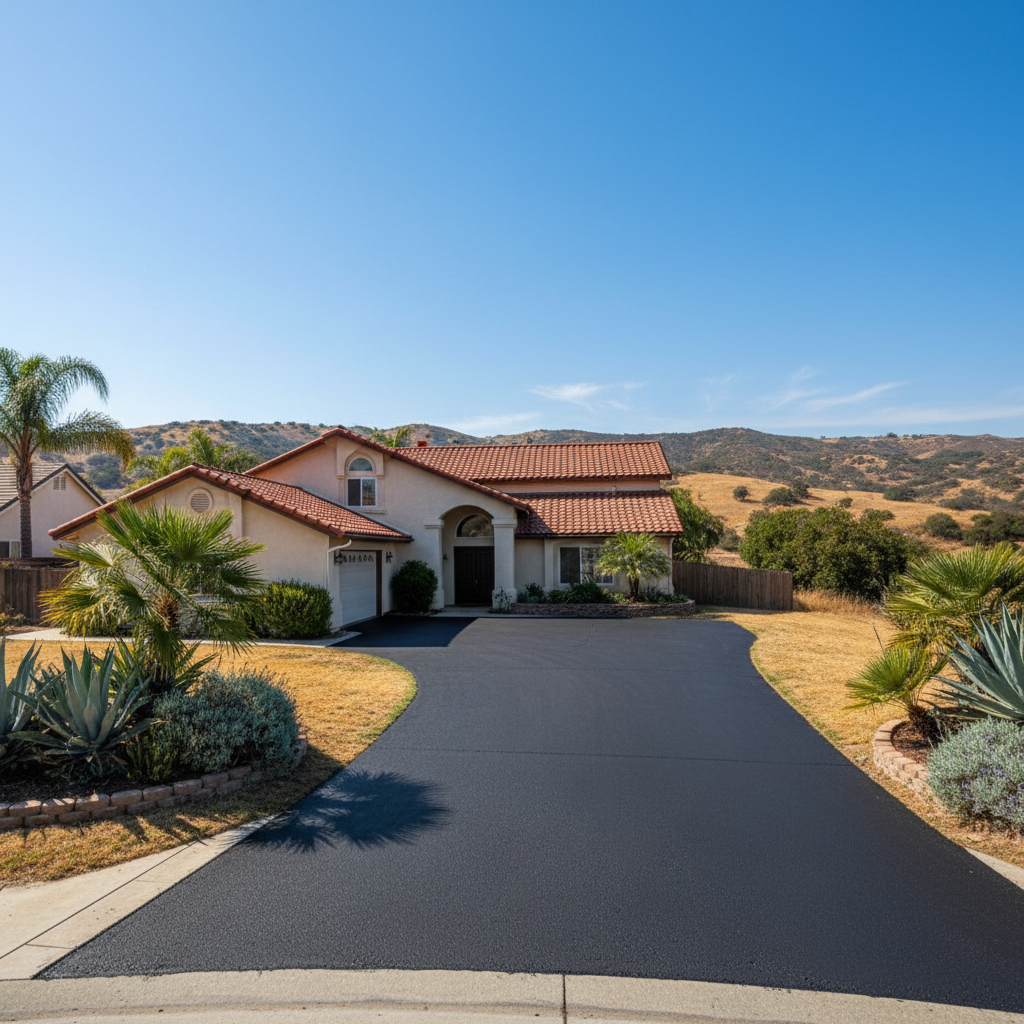
Most property owners in La Mesa do not think about their asphalt until it starts looking faded and tired under the San Diego sun. If your driveway is losing its rich dark color and starting to feel rough, Asphalt Sealcoating is the best way to hit the reset button. Applying some sealer is not just a weekend chore to rush through. You need a solid plan so you do not end up tracking black goo into your house or messing up the cure.
La Mesa Diamond Asphalt sees plenty of driveways suffering from rapid oxidation because the local climate bakes the liquid oils right out of the pavement. When you map out an Asphalt Sealcoating project correctly, you add years to your driveway lifespan. The project requires proper alignment from start to finish to avoid any headaches.
The Ideal Timeline for Your Project
Timing matters more than you might think. You want to aim for late spring through early fall when the ground is warm and rain is completely out of the picture. If a sudden afternoon shower hits fresh sealer, you are going to have a massive mess on your hands. Give yourself about two to three weeks of lead time before you actually want the work done. That way, you can get quotes, lock down a date, and handle the prep work without rushing.
On the actual day of the project, plan for the crew to take a few hours to clean, patch, and spray or squeegee the material down. The real waiting game is the cure time. You need to keep all vehicles off the new surface for at least 48 hours. Foot traffic is usually fine after a day, but cars will leave tire marks if you rush it.
How to Prep Your Property
Getting your driveway ready for Asphalt Sealcoating takes a little sweat equity on your part, but it makes a huge difference in how the final product turns out. Start by moving all vehicles off the asphalt the night before. Park them down on Nebo Drive or up on the street so the crew has a completely empty slate.
You also want to clear out any obstacles:
- Move potted plants, basketball hoops, and trash bins away from the edges.
- Shut off your automatic lawn sprinklers for the day of application and 24 hours after. Water running across fresh sealer ruins the bond completely.
- Sweep away heavy debris, leaves, and loose gravel so the cleaning crew can get right down to the pores of the asphalt.
What to Expect During the Process
When the crew shows up, they start by aggressively blowing off dust and scrubbing oil spots. If oil stains are not primed properly, the sealer simply peels right off. Next comes crack filling. Any cracks wider than a quarter-inch need rubberized hot-pour or cold pour depending on the scope. Once the cracks cure, the actual Asphalt Sealcoating goes down. Depending on what we agreed upon, it is either sprayed or hand-applied with a squeegee. Hand-squeegeeing works wonders on older residential driveways because it forces the material deep into the tiny cracks and pits.
Questions to Ask Before You Sign
Never sign a contract with a contractor who knocks on your door with leftover material in the back of an unmarked pickup. Protect your investment by asking a few pointed questions first.
Are you using a coal-tar emulsion or an asphalt-based sealer? Asphalt-based is usually better for residential driveways and smells a lot less toxic. What kind of warranty do you offer on the application? Make sure you know how many coats are included in the price. A single thin coat will not cut it against the heavy UV rays we get around Helix High. Get everything in writing before a single drop of product touches your pavement.