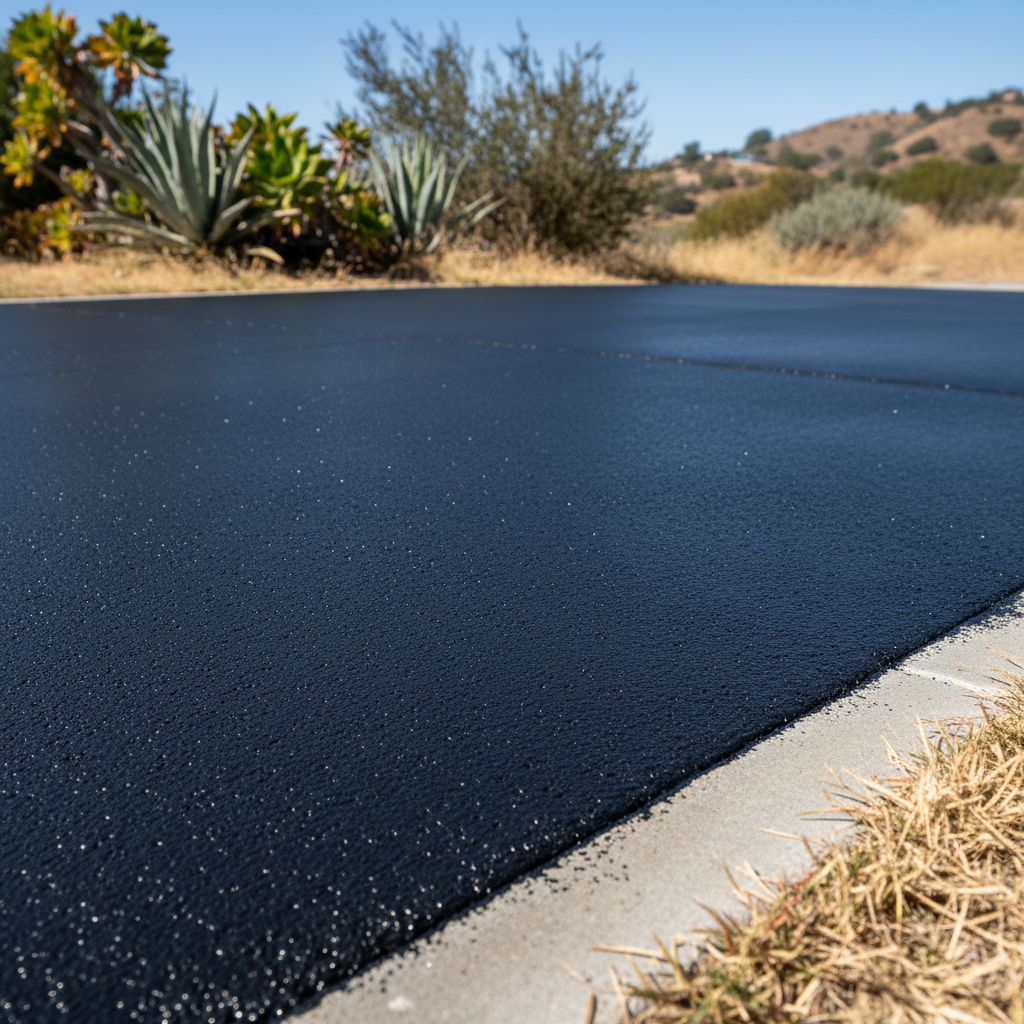
Alright, La Mesa homeowners, let's chat about your asphalt driveways. You've probably heard a lot about sealcoating, right? Maybe you've even seen crews spraying it down the street. Everyone says you *should* do it, but do you really know why? And what about all the nitty-gritty details? I'm here to give you the real story, no fancy words, just honest answers to the questions I get asked most often.
So, what *is* asphalt sealcoating, really?
Think of sealcoating like sunscreen for your driveway, but with some extra perks. It's a liquid protective layer, something we put right over your existing asphalt. This stuff is usually a mix of asphalt emulsion or refined coal tar, water, sand, and a few other things. Once it dries, it forms a barrier that really helps shield your asphalt from all the daily abuse it takes.
It's not just about making things look nice, though it definitely does that by bringing back that deep black finish. Its main job is to protect your asphalt from those harsh UV rays, which, over time, make it oxidize and get brittle. It also stops water from seeping into tiny cracks – and that's a huge deal here in La Mesa when winter rains hit after a long, dry summer. Oh, and it helps protect against oil and gas spills too, making your driveway much easier to clean up.
How often should I actually get my driveway sealcoated?
This isn't a one-and-done kind of thing, but it's not something you do every year either. Most pros, and I'm one of them, suggest sealcoating your home driveway every two to three years. Some folks even say every three to five years. The exact timing really depends on a few things: how much traffic your driveway sees, how good the last application was, and, of course, the weather. Here in La Mesa, with all that intense sun, aiming for that two-to-three-year mark usually keeps the protection strong.
Now, if you've got a brand-new asphalt driveway, don't rush into it. You'll want to wait at least six to twelve months, maybe even a full year, before that first sealcoat. This gives the new asphalt enough time to fully cure and let its oils release. If you seal it too soon, the sealant might not stick properly, or it could trap those oils, making your asphalt softer than it should be. Not ideal, right?
What's the best time of year to sealcoat in La Mesa?
Timing is pretty critical for a good sealcoating job. You need the right weather conditions for the sealant to cure properly. The sweet spot is generally from late spring right through early fall. We're looking for steady temperatures above 50°F, ideally both day and night. Warm pavement really helps the coating dry and bond well.
It's also super important that there's no rain in the forecast for at least 24 hours after we apply it. Humidity levels should be moderate too. So, those long, sunny stretches we often get in La Mesa during the summer? They're usually perfect. Trying to sealcoat in cooler months or when rain is on the way can lead to a poor cure and a shorter life for your sealant.
Can sealcoating fix cracks and potholes?
This is a really common misunderstanding. Sealcoating is about preventing problems, not fixing major damage. It's great for filling tiny hairline cracks and surface imperfections, but it won't magically fix potholes or big, deep cracks. Think of it like painting over a hole in your wall – it might hide it for a bit, but it doesn't actually fix the structural issue.
Before we even consider sealcoating, any existing cracks need to be filled with a specialized crack filler, and potholes absolutely must be patched. This is crucial, especially with our occasional heavy downpours that can quickly turn a small crack into a huge problem if water gets underneath. Sealcoating goes on *after* those repairs are done, helping to protect them and stop new damage from forming.
How much does sealcoating usually cost?
The cost of sealcoating can swing a bit, but it's definitely way more affordable than getting a full repave. Generally, you're looking at something like $0.15 to $0.25 per square foot for the sealcoating itself. However, when you add in materials and labor, especially for a professional job, it can range from $1.25 to $1.50 per square foot. For an average home driveway, say around 600 square feet, that could put you in the ballpark of $750 to $900.
Just remember, factors like the size and shape of your driveway, its current condition, and any necessary prep work (like cleaning or crack filling) will affect the final price. Some contractors might also have a minimum fee. It's always a good idea to get a few detailed quotes from local La Mesa companies, like La Mesa Diamond Asphalt, to figure out the exact cost for your specific situation.
How long do I need to stay off my driveway after it's been sealcoated?
Patience is key here! While the surface might feel dry to the touch pretty quickly – usually within a few hours – it needs time to fully cure and harden. You should plan to keep foot traffic off for at least 24 hours. For vehicles, it's even longer; I always recommend waiting a minimum of 24 to 48 hours, but honestly, three to five days is even better just to be safe.
Driving on it too soon, especially making sharp turns, can cause scuff marks or even damage that fresh sealant, undoing all the hard work. The warmer the weather, the faster it cures, but don't push it. If you've got a busy family, planning your sealcoating day carefully will save you a lot of headaches.
What's the difference between sealcoating and repaving?
This is a big one, and it really comes down to the condition of your asphalt. Sealcoating is a protective layer for asphalt that's still in pretty good shape. It extends the life of healthy asphalt by shielding it from the elements and making it look brand new.
Repaving, on the other hand, is a much more involved and expensive job. It means completely removing the old asphalt and putting down a brand-new surface. You need repaving when your asphalt has serious structural damage – we're talking widespread deep cracks, potholes, or an unstable base. Sealcoating simply won't fix those kinds of problems. If your driveway is showing major signs of failure, repaving is the solution, not sealcoating. Choosing the right option can save you a lot of money in the long run, believe me.